The Pavana Narasimha Swamy Temple is one of the holiest, most peaceful, and spiritually significant shrines among the Nava Narasimha Temples of Ahobilam. Located deep inside the dense forests of the Nallamala Hills in Andhra Pradesh, the temple stands on the sacred banks of the Pavana River, from which it derives its name. Hidden amidst untouched wilderness, rocky hills, flowing streams, and rich forest vegetation, this temple offers one of the most serene spiritual experiences in the entire Ahobilam pilgrimage. Among all the Nava Narasimha temples, Pavana Narasimha is traditionally regarded as the most peaceful (Shantha) manifestation of Lord Narasimha and is often described as the "Kshetra Ratna" (The Jewel of Ahobilam).
The name "Pavana" comes from the sacred Pavana River, which flows beside the temple. In Sanskrit, the word "Pavana" means "that which purifies." The temple is therefore believed to be a place where devotees are spiritually purified from sins and granted divine grace. Because of this sacred association, the Lord worshipped here came to be known as Sri Pavana Lakshmi Narasimha Swamy. Temple tradition also reveres Him as Pamuleti Narasimha Swamy, owing to the presence of Adisesha protecting the deity.
According to the Bhagavata Purana, Brahmanda Purana, and the sacred Ahobila Sthala Purana, Lord Vishnu manifested as Lord Narasimha to protect His devoted child Prahlada and destroy the demon king Hiranyakashipu. After fulfilling His divine mission, Lord Narasimha appeared in nine different forms throughout the sacred hills of Ahobilam, each representing a unique aspect of His divine personality. Among these nine manifestations, Pavana Narasimha represents the Lord's supreme compassion, forgiveness, purification, and unconditional mercy toward His devotees.
One of the most important legends associated with this temple concerns Maharshi Bharadwaja. According to temple tradition, Bharadwaja Maharshi became afflicted by a severe spiritual impurity and desired complete purification through penance. He came to the sacred forests of Ahobilam and performed intense meditation on the banks of the Pavana River, continuously worshipping Lord Narasimha with unwavering devotion.
Pleased with the sage's sincere austerities, Lord Narasimha appeared before Bharadwaja in His peaceful form and granted him complete purification from his sins and spiritual afflictions. The Lord blessed the sage with divine knowledge, inner peace, and liberation. Since this sacred place became associated with the Lord's power to purify all sins, it came to be known as Pavana Narasimha, meaning "The Purifying Narasimha." Devotees firmly believe that worshipping the Lord here with sincere devotion helps remove the sins accumulated knowingly and unknowingly throughout one's life.
Another unique tradition closely associated with Pavana Narasimha Temple is its connection with the Chenchu tribal community of the Nallamala forests. According to local temple tradition, Goddess Chenchu Lakshmi, regarded as a manifestation of Mahalakshmi, appeared among the Chenchu people. Lord Narasimha accepted Chenchu Lakshmi as His divine consort, establishing a sacred relationship with the tribal community. Even today, the Chenchu people regard Lord Narasimha as their beloved son-in-law and continue to preserve several ancient customs connected with the temple. This remarkable relationship symbolizes the Lord's acceptance of devotees from every community and background.
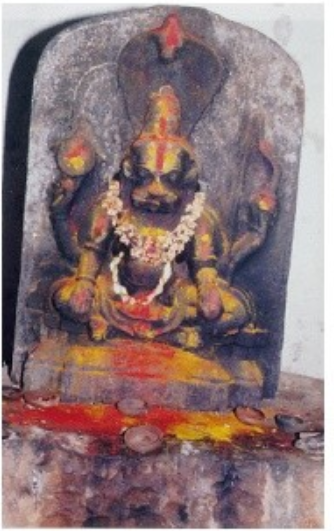
The presiding deity, Sri Pavana Lakshmi Narasimha Swamy, is worshipped in one of the most graceful forms among the Nava Narasimha temples. The Lord is seated majestically with Goddess Lakshmi on His lap, symbolizing peace, prosperity, compassion, and divine protection. Above the deity spreads the magnificent hood of seven-headed Adisesha, protecting the Lord and His consort. Because of this unique iconography, the deity is affectionately known as Pamuleti Narasimha Swamy. The original ancient idol is preserved with great reverence, while daily worship is offered to the consecrated deity presently installed in the sanctum.
The temple is situated in one of the most remote locations of the Ahobilam pilgrimage. Pilgrims travel through forest roads, rocky pathways, streams, and beautiful valleys before reaching the shrine. The journey itself is considered an act of devotion. The peaceful sound of the Pavana River, the cool forest breeze, and the untouched natural surroundings create an atmosphere ideal for meditation, prayer, and spiritual contemplation. Many devotees regard this temple as the most tranquil destination among all the Nava Narasimha temples.
Historically, the Pavana Narasimha Temple has existed for many centuries and forms an integral part of the sacred Nava Narasimha Yatra. Like the other temples of Ahobilam, it flourished under the patronage of the Western Chalukyas, Kakatiya Kings, Reddy Kings, and especially the Vijayanagara Empire. During the reign of Emperor Sri Krishnadevaraya, generous donations, land grants, ornaments, temple renovations, and pilgrim pathways were developed, ensuring the continued growth of Ahobilam as one of India's foremost Narasimha Kshetras.
The temple has remained under the spiritual guardianship of the Sri Ahobila Mutt, founded by Sri Adivan Sathakopa Yatheendra Mahadesikan. For more than six centuries, the Ahobila Mutt has preserved the temple's Pancharatra Agama traditions, daily worship, Vedic chanting, annual festivals, and Sri Vaishnava philosophy. The continuity of worship has ensured that Pavana Narasimha Temple remains one of the most revered centers of Narasimha devotion in India.
Architecturally, the temple reflects the beauty of traditional South Indian stone temple construction. The shrine blends naturally with the surrounding forests and hills without disturbing the pristine environment. Unlike grand urban temples, Pavana Narasimha Temple offers a simple yet profoundly spiritual experience where nature itself becomes part of worship. The flowing river, green forests, rocky landscape, and sacred silence enhance the devotional atmosphere.
Every year, thousands of pilgrims undertake the challenging journey to Pavana Narasimha Temple during Narasimha Jayanti, Brahmotsavam, Vaikuntha Ekadashi, and other important Sri Vaishnava festivals. Special Abhishekam, Archana, Alankaram, Vedic recitations, devotional singing, and religious processions are conducted with great devotion. Many devotees visit the temple seeking relief from family difficulties, health problems, fear, and the effects of past karma.
Spiritually, Sri Pavana Lakshmi Narasimha Swamy represents divine purification, forgiveness, compassion, peace, protection, and liberation. Devotees believe that sincere worship at this sacred shrine removes sins from both past and present lives, grants mental peace, protects the family, and leads the devotee toward spiritual liberation. The Lord teaches that His infinite compassion is available to everyone who approaches Him with faith, humility, and sincere devotion.
Today, the Pavana Narasimha Swamy Temple continues to shine as one of the most sacred destinations of the Nava Narasimha pilgrimage. Hidden within the timeless beauty of the Nallamala forests and enriched by centuries of mythology, history, tribal tradition, and Sri Vaishnava heritage, the temple stands as an eternal symbol of divine mercy, spiritual purification, and the boundless grace of Lord Lakshmi Narasimha, who lovingly protects and liberates every devotee who seeks His refuge.