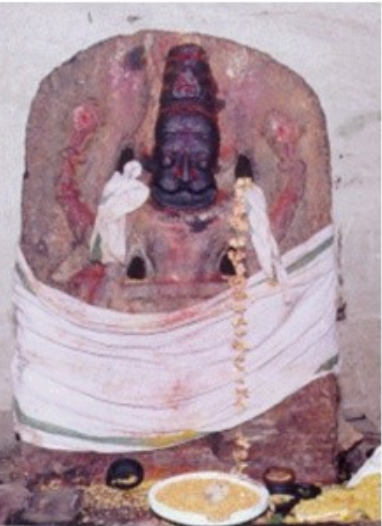
The Yogananda Narasimha Swamy Temple is one of the most sacred and spiritually uplifting shrines among the Nava Narasimha Temples of Ahobilam. Located approximately 2 kilometers southeast of Lower Ahobilam in the beautiful Nallamala Hills of Andhra Pradesh, this ancient temple is dedicated to Sri Yogananda Lakshmi Narasimha Swamy, the peaceful and meditative form of Lord Narasimha. Unlike the fierce manifestations worshipped in some of the other Nava Narasimha temples, Yogananda Narasimha represents the Lord as the Supreme Guru, who teaches Yoga, Dharma, devotion, and spiritual wisdom to His greatest devotee, Prahlada. The temple is regarded as a sacred center for meditation, self-realization, mental peace, and spiritual enlightenment.
The Meaning of "Yogananda"
The name "Yogananda" is derived from two Sanskrit words: "Yoga," meaning spiritual union, meditation, and self-realization, and "Ananda," meaning bliss or eternal happiness. Therefore, Yogananda Narasimha means "The Lord Who Bestows the Bliss of Yoga." This divine name reflects the Lord's role as the spiritual teacher who guides devotees toward inner peace, wisdom, and liberation.
Divine Manifestation & Pacification
According to the Bhagavata Purana, Vishnu Purana, Brahmanda Purana, and the sacred Ahobila Sthala Purana, Lord Vishnu manifested as Lord Narasimha to protect His devoted child Prahlada and destroy the demon king Hiranyakashipu. After emerging from the pillar and slaying Hiranyakashipu at twilight, Lord Narasimha remained in His fierce Ugra form. The intensity of His divine anger shook the entire universe, and even the Devas, sages, and celestial beings were unable to calm Him.
Finally, Prahlada approached the Lord with complete faith, humility, and devotion. His sincere prayers gradually pacified Lord Narasimha. Once His anger subsided, the Lord assumed a calm, peaceful, and meditative form. At this sacred place, He instructed Prahlada in the eternal principles of Yoga, Bhakti (devotion), Dharma (righteousness), Jnana (divine knowledge), and complete surrender to the Supreme Lord. Because Lord Narasimha became the divine teacher of Yoga to Prahlada, this temple became famous as Yogananda Narasimha Swamy Temple.
The Supreme Guru's Teachings
Temple tradition states that Prahlada received the highest spiritual wisdom directly from Lord Narasimha here.
The Lord explained that true strength does not come from physical power or worldly wealth but from unwavering devotion, self-control, compassion, humility, and complete faith in God. These sacred teachings transformed Prahlada into one of the greatest devotees in Hindu tradition and continue to inspire millions of devotees around the world.
The Presiding Deity & Serene Atmosphere
The presiding deity, Sri Yogananda Lakshmi Narasimha Swamy, is worshipped in a serene yogic posture. The Lord appears calm, composed, and deeply absorbed in meditation, symbolizing perfect control over the mind, senses, and emotions. Unlike the fierce Ugra Narasimha of Upper Ahobilam or Jwala Narasimha, the deity here radiates divine peace and spiritual tranquility. Devotees believe that worshipping Yogananda Narasimha removes mental stress, anxiety, fear, confusion, and negative thoughts while granting wisdom, concentration, self-discipline, and spiritual growth.
According to local temple tradition, this sacred place was once surrounded by the peaceful hermitages of great sages who performed severe penance in the forests of the Nallamala Hills. The serene atmosphere made it an ideal location for meditation and spiritual practices. The Lord's appearance in His yogic form sanctified the entire region, making it one of the most peaceful places in Ahobilam.
Historical Patronage & Architecture
Historically, the Yogananda Narasimha Temple has existed for more than a thousand years. It has been revered by saints, sages, Sri Vaishnava Acharyas, and countless devotees. The temple flourished under the patronage of several South Indian dynasties, including the Western Chalukyas, Kakatiya Kings, Reddy Kings, and especially the Vijayanagara Empire. During the glorious reign of Emperor Sri Krishnadevaraya, generous donations, land grants, ornaments, and architectural improvements were made to the temples of Ahobilam. Many of the ancient stone structures and pilgrim pathways seen today belong to this remarkable period of South Indian history.
The temple has remained under the spiritual care of the Sri Ahobila Mutt, founded in the fifteenth century by Sri Adivan Sathakopa Yatheendra Mahadesikan under the divine command of Lord Narasimha. The Ahobila Mutt continues to preserve the temple's daily worship, Vedic chanting, Pancharatra Agama traditions, festivals, and Sri Vaishnava philosophy. The uninterrupted worship carried out for centuries reflects the temple's enduring importance in the Sri Vaishnava tradition.
Architecturally, the temple reflects the simplicity and elegance of ancient South Indian stone architecture. The sanctum is built with beautifully carved stone blocks that harmonize perfectly with the surrounding natural landscape. The peaceful environment, green vegetation, fresh mountain air, and silence of the forest create an atmosphere ideal for meditation and contemplation. Many devotees spend time in silent prayer before the deity, experiencing a deep sense of inner peace.
Pilgrimage and Festivals
The temple is easily accessible from Lower Ahobilam and is one of the first Nava Narasimha temples visited by pilgrims. Many devotees include Yogananda Narasimha in the same pilgrimage circuit as Bhargava Narasimha, Chatravata Narasimha, and Prahlada Varada Narasimha, completing an important section of the Nava Narasimha Yatra.
Every year, the temple celebrates Narasimha Jayanti, Brahmotsavam, Vaikuntha Ekadashi, Dolotsavam, and various Sri Vaishnava festivals with great devotion. During these sacred occasions, special Abhishekam, Archana, Alankaram, Vedic recitations, devotional music, and processions are performed. Thousands of devotees from across India gather to seek the blessings of Sri Yogananda Lakshmi Narasimha Swamy for peace, wisdom, education, health, family harmony, and spiritual advancement.
Spiritual Significance
Spiritually, Yogananda Narasimha Swamy represents divine wisdom, meditation, self-control, compassion, inner peace, and liberation. The Lord teaches that true victory is not merely the destruction of external enemies but the conquest of anger, pride, greed, fear, and ignorance within oneself. His sacred teachings to Prahlada continue to guide devotees toward a life of righteousness, devotion, humility, and eternal happiness.
Today, the Yogananda Narasimha Swamy Temple remains one of the holiest destinations in the Nava Narasimha pilgrimage.
Surrounded by the majestic beauty of the Nallamala Hills and enriched by centuries of mythology, history, and Sri Vaishnava tradition, the temple stands as an eternal symbol of divine wisdom, spiritual enlightenment, and the infinite compassion of Lord Lakshmi Narasimha. Every devotee who visits this sacred shrine experiences the Lord not as a fierce protector, but as the eternal Guru who lovingly guides humanity toward peace, devotion, and ultimate liberation.