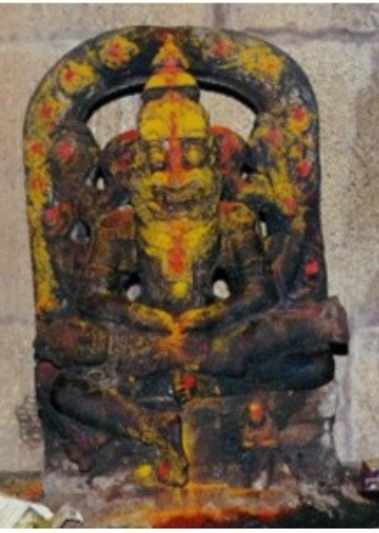
The Bhargava Narasimha Swamy Temple is one of the most ancient and spiritually powerful shrines among the Nava Narasimha Temples of Ahobilam. Located approximately 2 kilometers from Lower Ahobilam, near the sacred Akshaya (Bhargava) Theertham, the temple is surrounded by the dense forests and rocky hills of the Nallamala range in Andhra Pradesh. This holy shrine is dedicated to Sri Bhargava Narasimha Swamy, a fierce yet compassionate manifestation of Lord Narasimha, who appeared before Bhargava Rama (Lord Parasurama) after his intense penance. The temple is revered as a place of repentance, purification, courage, and divine forgiveness, attracting thousands of devotees every year.
The Legend of Bhargava Rama
The name "Bhargava" is derived from Bhargava Rama, better known as Lord Parasurama, the sixth incarnation of Lord Vishnu. Parasurama belonged to the illustrious lineage of Sage Bhrigu, and therefore he was widely known as Bhargava. After fulfilling his divine mission of defeating the oppressive Kshatriya rulers twenty-one times, Parasurama desired inner peace and liberation from the burden of war. Although he had acted according to divine will, he sought purification through penance and devotion.
According to the Ahobila Sthala Purana, Vishnu Purana, and long-standing Sri Vaishnava tradition, Parasurama travelled to the sacred forests of Ahobilam. On the banks of the holy Akshaya Theertham, he performed severe austerities, meditation, and continuous worship of Lord Narasimha. His penance lasted for a long period, during which he remained completely absorbed in prayer and surrender.
The Divine Manifestation
Pleased with Parasurama's unwavering devotion and humility, Lord Narasimha manifested before him in a magnificent divine form. The Lord absolved Parasurama of the burden of his past actions, granted him spiritual peace, and blessed him with eternal wisdom. Since Lord Narasimha revealed Himself to Bhargava Rama, this sacred shrine became known as the Bhargava Narasimha Swamy Temple, and the nearby sacred pond came to be called Bhargava Theertham or Akshaya Theertham. Devotees believe that bathing in this holy theertham before worshipping the Lord brings spiritual purification and divine blessings.
The Presiding Deity
The presiding deity, Sri Bhargava Narasimha Swamy, is worshipped in one of the most powerful forms among the Nava Narasimha temples. The Lord is depicted in a fierce posture, reminding devotees of His divine mission to destroy evil and protect righteousness. Traditional descriptions mention that the deity possesses six arms and is shown overpowering Hiranyakashipu, symbolizing the complete victory of Dharma over Adharma. Above the deity is a beautifully carved Makara Torana, decorated with sculptures representing the Dasavatara of Lord Vishnu. This form is regarded as the second fiercest manifestation of Lord Narasimha after Jwala Narasimha.
Sacred Waters & Royal Patronage
The temple stands beside the sacred Akshaya Theertham, one of the holiest water bodies in Ahobilam. Temple tradition holds that the waters of this theertham never lose their sanctity and continue to bless pilgrims throughout the year. Many devotees take a ritual bath here before offering prayers to Bhargava Narasimha, believing that sincere worship removes sins, grants prosperity, and brings the compassionate grace of Goddess Lakshmi.
Historically, the Bhargava Narasimha Temple has existed for many centuries and forms an integral part of the sacred Ahobilam pilgrimage. Like the other Nava Narasimha temples, it received royal patronage from the Western Chalukyas, Kakatiya Kings, Reddy Kings, and especially the Vijayanagara Empire. During the reign of Emperor Sri Krishnadevaraya, the temples of Ahobilam flourished through generous donations, land grants, temple renovations, and the construction of pilgrim pathways. Ancient inscriptions found in Ahobilam testify to the importance of these temples throughout medieval South Indian history.
Sri Ahobila Mutt & Architecture
The temple has also been preserved for centuries by the Sri Ahobila Mutt, founded by Sri Adivan Sathakopa Yatheendra Mahadesikan. Under the guidance of the Ahobila Mutt, the temple continues to follow the ancient Pancharatra Agama tradition. Daily worship, Vedic chanting, Abhishekam, Alankaram, Archana, and annual festivals are conducted according to centuries-old Sri Vaishnava customs, preserving the sacred heritage of Ahobilam.
Architecturally, the temple reflects the simplicity and spiritual grandeur of ancient South Indian stone temples. Rather than being an enormous temple complex, the shrine harmoniously blends with the surrounding forests and rocky landscape. The peaceful natural environment allows pilgrims to experience deep meditation and devotion while worshipping the Lord.
The route to the temple passes through scenic forest tracks and rocky terrain, offering devotees a beautiful pilgrimage experience. During the rainy season, the surrounding hills become lush green, while the sacred pond remains one of the most attractive spiritual landmarks of the region. Pilgrims often combine their visit to Bhargava Narasimha with the nearby temples of Yogananda Narasimha, Chatravata Narasimha, and Prahlada Varada Narasimha, completing an important section of the Nava Narasimha pilgrimage.
Spiritual Significance & Festivals
Every year, thousands of devotees visit the temple during Narasimha Jayanti, Brahmotsavam, Vaikuntha Ekadashi, and other major Sri Vaishnava festivals. During these celebrations, the temple comes alive with Vedic recitations, special Abhishekam, Alankaram, processions, devotional music, and religious discourses. Devotees from across India gather to seek the blessings of Sri Bhargava Narasimha Swamy for courage, prosperity, forgiveness, and spiritual advancement.
Spiritually, Bhargava Narasimha Swamy represents repentance, purification, righteousness, courage, humility, and divine forgiveness. The story of Parasurama teaches that even the greatest warriors seek inner peace through devotion and surrender to God. The temple reminds every devotee that sincere repentance, unwavering faith, and humble prayer always attract the boundless compassion of Lord Narasimha.
"Today, the Bhargava Narasimha Swamy Temple continues to be one of the holiest destinations of the Nava Narasimha pilgrimage. Surrounded by the timeless beauty of the Nallamala Hills, enriched by sacred legends, ancient history, and centuries of Sri Vaishnava tradition, the temple stands as an eternal symbol of divine justice, spiritual purification, and the infinite mercy of Lord Lakshmi Narasimha toward all who seek His refuge."