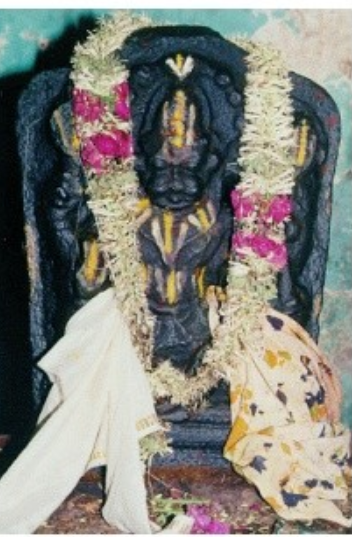
The Sacred Shrine of Ahobilam
The Karanja Narasimha Swamy Temple is one of the most sacred and unique shrines among the Nava Narasimha Temples of Ahobilam. Located on the ancient route between Lower Ahobilam and Upper Ahobilam in the beautiful Nallamala Hills of Andhra Pradesh, the temple is surrounded by dense forests, rocky landscapes, and the serene atmosphere of the Eastern Ghats.
It is one of the most easily accessible temples in the Nava Narasimha pilgrimage and is especially revered for its unique connection with Lord Hanuman (Anjaneya Swamy). Among all the Nava Narasimha temples, Karanja Narasimha is the only shrine where Lord Narasimha appears with attributes traditionally associated with Lord Sri Rama, making this temple spiritually unique.
Origin of the Name & Manifestation
The name "Karanja" is derived from the sacred Karanja Tree (Pongamia pinnata) beneath which the Lord is believed to have manifested. According to ancient temple tradition, the deity appeared under this tree to bless His devotees, and the surrounding forest was once filled with Karanja trees. Because of this divine manifestation, the Lord came to be worshipped as Sri Karanja Narasimha Swamy.
According to the Ahobila Sthala Purana and Sri Vaishnava tradition, after Lord Narasimha destroyed the demon king Hiranyakashipu and protected His great devotee Prahlada, He manifested in several divine forms throughout Ahobilam to bless sages, celestial beings, and devotees. Each of the Nava Narasimha temples represents a unique aspect of the Lord's divine nature. Karanja Narasimha represents the Lord as the compassionate protector who responds to sincere devotion regardless of the form in which He is worshipped.
The Divine Legend of Lord Hanuman
The most celebrated legend associated with this temple is the story of Lord Hanuman. Hanuman was the greatest devotee of Lord Sri Rama and dedicated his entire life to His service. Although Hanuman knew that Lord Rama and Lord Narasimha were both incarnations of Lord Vishnu, his heart was completely devoted to Sri Rama. Wishing to receive the darshan of Narasimha without losing his devotion to Rama, Hanuman performed severe penance beneath the sacred Karanja tree at Ahobilam.
Pleased with Hanuman's unwavering devotion, Lord Narasimha appeared before him in a remarkable and unique form. The Lord retained His Narasimha appearance but carried the Saranga Bow, a symbol closely associated with Lord Rama, along with His divine Sudarshana Chakra. By revealing Himself in this extraordinary form, the Lord assured Hanuman that Sri Rama and Sri Narasimha are one and the same Supreme Lord, manifesting in different incarnations to protect Dharma and uplift devotees. This divine event remains one of the most cherished legends of Ahobilam.
The Divine Form & Sanctum
Temple tradition also associates this sacred place with Kapila Maharshi, who is believed to have worshipped Lord Narasimha here and attained divine blessings after performing penance. Because of the Lord's compassion toward great sages and devotees, the temple has long been regarded as a powerful place for meditation, devotion, and spiritual realization.
The presiding deity, Sri Karanja Narasimha Swamy, is worshipped in a majestic seated yogic posture beneath the symbolic Karanja tree. The Lord possesses four arms, holding the Sudarshana Chakra and the Saranga Bow, while the remaining hands bestow divine protection and blessings upon devotees. Another remarkable feature of the deity is the third eye (Trinetra) on His forehead, symbolizing supreme wisdom and the unity of divine energies. Above the Lord is the protective hood of Adi Sesha, emphasizing His eternal sovereignty and cosmic protection.
Facing the sanctum is a revered shrine dedicated to Karanja Anjaneya Swamy. Hanuman stands with folded hands in eternal devotion before Lord Narasimha, commemorating the sacred moment when the Lord granted him this unique vision. Pilgrims traditionally offer prayers to both Karanja Narasimha and Karanja Anjaneya, seeking courage, devotion, wisdom, and success.
Heritage, History, and Patronage
The temple is beautifully situated amidst the forests of the Garudadri Hills, with the sacred Bhavanasini (Papanasini) River flowing nearby. The peaceful surroundings, cool mountain breeze, and natural landscape create an atmosphere ideal for prayer, meditation, and contemplation.
Historically, Karanja Narasimha Temple has flourished for many centuries under the patronage of the Kakatiya Kings, Reddy Kings, and especially the Vijayanagara Empire. During the reign of Emperor Sri Krishnadevaraya, the temples of Ahobilam received generous royal support through land grants, ornaments, donations, and architectural improvements. Ancient stone pathways, temple structures, and pilgrim routes developed during this period continue to serve devotees even today.
The temple has also remained under the spiritual care of the Sri Ahobila Mutt, founded by Sri Adivan Sathakopa Yatheendra Mahadesikan in the fifteenth century. The Mutt continues to preserve the ancient Pancharatra Agama traditions, daily worship, Vedic chanting, festivals, and Sri Vaishnava philosophy.
Architectural Elegance & Spiritual Legacy
Architecturally, the temple reflects the simplicity and elegance of traditional South Indian stone temples. Rather than being a large monumental structure, it harmoniously blends with the surrounding forest environment. The modest yet spiritually powerful shrine reminds devotees that the true greatness of a sacred place lies not in its size but in its divine presence and timeless traditions.
Every year, thousands of pilgrims visit Karanja Narasimha Temple during Narasimha Jayanti, Brahmotsavam, Vaikuntha Ekadashi, and other important Sri Vaishnava festivals. Special Abhishekam, Archana, Alankaram, Vedic recitations, and devotional processions are conducted with great reverence.
Spiritually, Karanja Narasimha Swamy symbolizes unwavering devotion, divine compassion, courage, humility, and the unity of all incarnations of Lord Vishnu. The sacred story of Hanuman receiving the Lord's unique darshan teaches that sincere devotion transcends all forms and names of God. Today, surrounded by the sacred Nallamala forests and enriched by centuries of mythology, history, and tradition, it stands as an eternal symbol of the boundless compassion of Lord Lakshmi Narasimha.