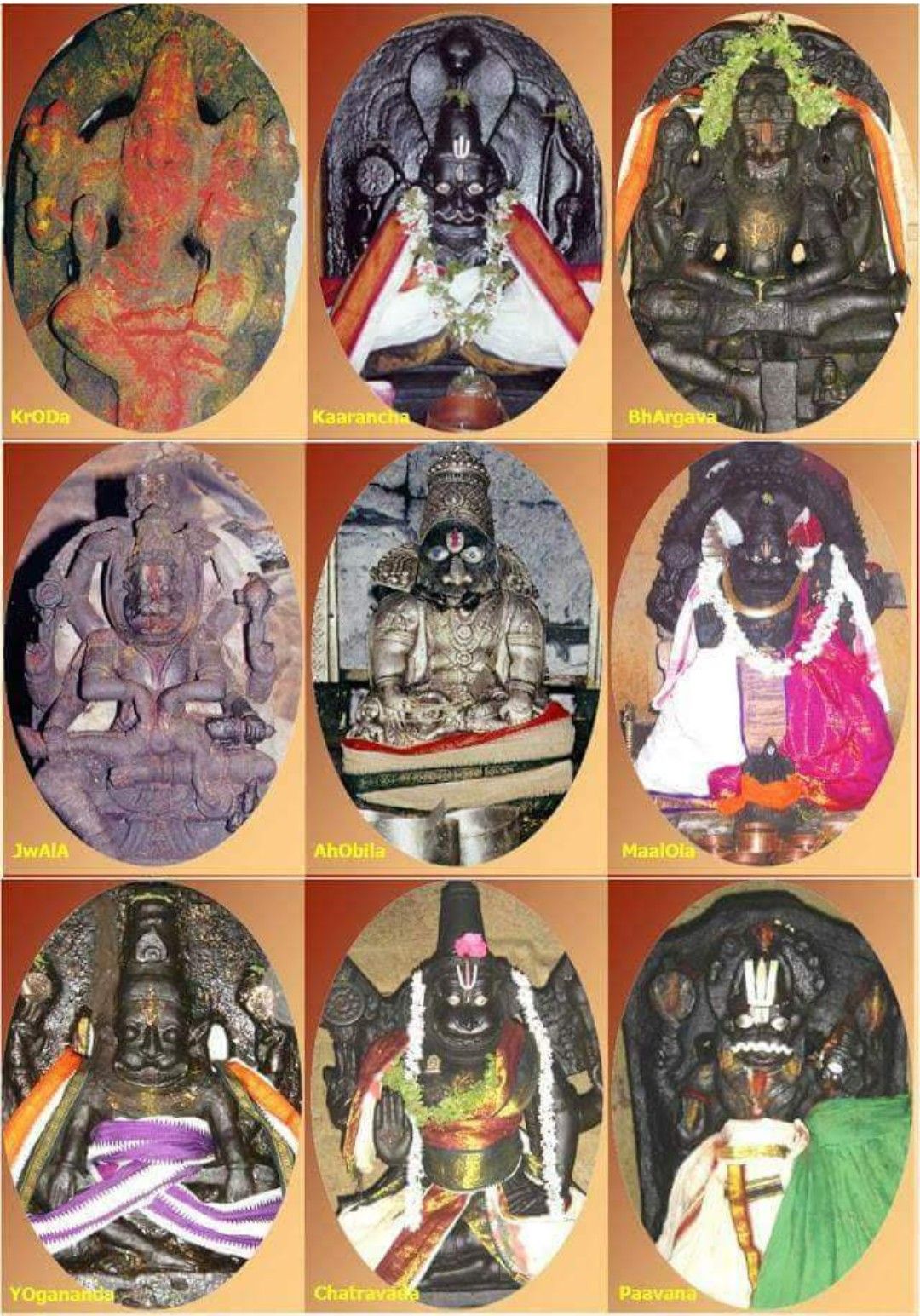
Nava Narasimha Swamy Temples
The Supreme Sacred Abode of Lord Lakshmi Narasimha in the Nallamala Hills
The Supreme Sacred Abode of Lord Lakshmi Narasimha in the Nallamala Hills
Ahobilam is recognized globally as the most sacred and authentic pilgrimage destination dedicated to Lord Narasimha. Nestled amidst the breathtaking and dense Nallamala Hills of Andhra Pradesh, it is revered as the exact location where the Lord manifested from a stone pillar to protect his supreme devotee, Prahlada, and vanquish the demon king Hiranyakashipu. The entire mountain range represents the majestic body of the divine serpent Adishesha. Every rock, tree, and path here vibrates with immense spiritual energy, offering devotees a profound journey of faith and salvation.
Situated at the gentle foothills, Lower Ahobilam serves as the gateway to this divine realm. It hosts the spectacular Prahlada Varada Lakshmi Narasimha Swamy Temple, known for its intricate Vijayanagara architectural brilliance. Here, the Lord is worshipped in a tranquil and benevolent form, blessing Prahlada. It is the primary base camp for all pilgrims, providing essential facilities and a peaceful environment before commencing the arduous forest treks.
Hidden deep within the rocky terrains and thick canopy of the Nallamala forest, Upper Ahobilam is a realm of mysticism and adventure. It requires navigating through natural trails, pristine waterfalls, and steep stone steps. This elevated region is home to ancient cave shrines, including the fierce Jwala Narasimha and the self-manifested Ahobila Narasimha, offering a deeply raw, untouched, and intensely spiritual atmosphere.
The benevolent form blessing Prahlada with infinite grace at Lower Ahobilam.
The fierce, self-manifested principal deity located inside a natural cave in Upper Ahobilam.
The divine location near a sacred pond where Lord Parashurama performed intense penance.
The Lord seated in a deep meditative yogic posture, radiating supreme tranquility.
Seated majestically under a Peepal tree, known for His divine appreciation of music and arts.
Enshrined under a Karanja tree, holding a bow to bless Lord Rama during his forest exile.
The glorious deity possessing the face of a boar, granting supreme wisdom and ultimate success.
The peaceful, loving form adorned with Goddess Lakshmi, showering prosperity.
The fiercely radiating Lord situated at the exact spot where the demon was slain.
The calm deity residing deep in the forest near the serene Pavana river.
The towering, massive rock cliff representing the exact divine pillar from which Lord Narasimha emerged. Reaching this pinnacle requires a challenging, steep vertical trek, offering a breathtaking view and immense spiritual vibration.
A small, ancient cave structure located on the forest route, believed to be the traditional school where the great child devotee Prahlada studied and chanted the Lord's holy name, despite his father's strict warnings.
A highly sacred pond filled with reddish water. It is deeply believed in scriptures that Lord Narasimha washed his blood-stained hands in this very pool after the fierce destruction of the demon king Hiranyakashipu.
Embarking on a pilgrimage to the Nava Narasimha shrines is a deeply transformative experience. Each temple embodies a distinct cosmic power and virtue. By visiting these shrines, devotees absorb the divine energies of protection, unwavering courage, deep inner peace, infinite wisdom, and absolute prosperity. It signifies the destruction of one's inner ego and the ultimate triumph of dharma over adharma.
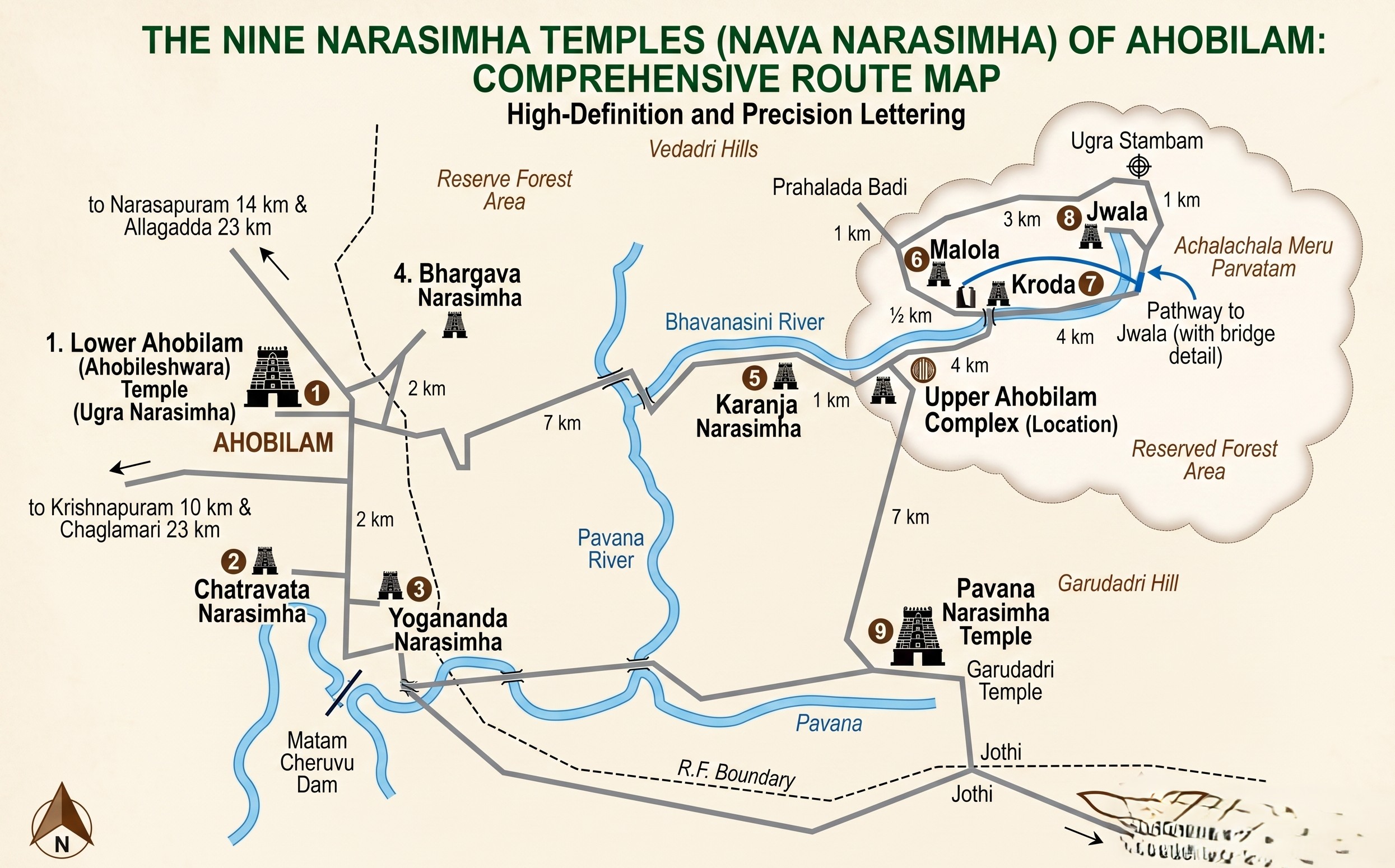
Start your forest trek early morning to avoid harsh sun. Carry abundant drinking water, wear highly comfortable grip shoes, and strictly travel in groups.
Private and shared jeeps are readily available from Lower Ahobilam to transport pilgrims to Upper Ahobilam and the Pavana Narasimha temple route.
Mobile networks and Google Maps work well up to Lower Ahobilam. Hiring official local guides is highly recommended for navigating dense forest paths safely.
Ahobila Mutt manages excellent guesthouses. Advance booking is crucial. Free Nitya Annadanam (meals) is served daily, alongside small private food stalls.